
TRAKVON · 2026 BUYER RESOURCES
How to Compare Commercial Remote-Controlled Slope Mowers: The Specs That Matter (2026 Buyer’s Guide)
Compare the worksite first, then machine dimensions, cutter configuration and slope limits. Evaluate remote-control instructions and ownership support for the exact build. Judge value by the complete work visit rather than brochure width or an unsupported productivity claim.
By Shandong Juxing Heavy Industry Machinery Co., Ltd. · Last updated:
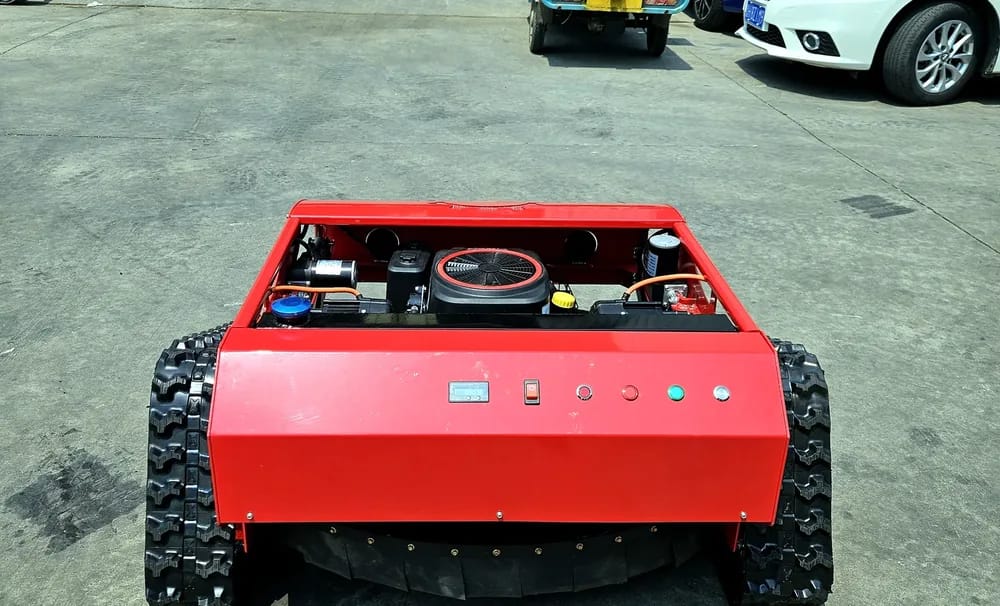
Quick answer: compare the worksite first, then the machine
Start with measured access and ground conditions, then shortlist dimensions, cutting setup and operating limits. Read the slope rating with its conditions. Compare service arrangements and the complete work cycle before deciding whether a machine is worth buying.
Step 1: Describe the site before you read a brochure
- Steepest slope, whether degrees or percent, and measurement method; photograph the measurement.
- Travel direction, cross-slope, transitions and available turning areas.
- Ground surface, moisture, soft spots, water edges and bearing condition.
- Vegetation type, height, density, woody stem size and hidden debris.
- Narrowest access, overhead clearance, obstacles and loading route.
- People, traffic, work boundaries, permitted hours and operator sightlines.
- Area per visit, visit frequency, desired finish, destination and local document requirements.
Use the slope-site checklist and the five application questions.
Step 2: Access and transport
Measure the narrowest opening and the unloading area. Cutting width is not machine width. A crate size is not a turning envelope; payload checks must include the machine, fuel, attachments, ramps and other carried equipment.
| Model | Cutting width | Machine size L×W×H | Packed size L×W×H | Listed weight | Engine / fuel / power | Chassis | Catalog slope figure | Cutting-height adjustment | Travel speed |
|---|---|---|---|---|---|---|---|---|---|
| TRAKVON four-wheel-drive 196 | 550 mm | 1000 × 830 × 430 mm | 1010 × 890 × 570 mm | 100 / 130 kg | LONCIN gasoline · 7.5 HP | Four-wheel drive | 30° | 30–80 mm | 0–5 km/h |
| TRAKVON 195-80YC | 800 mm | 1630 × 950 × 700 mm | 1740 × 920 × 1070 mm | 372 kg; bare-machine or packed basis not specified | Koop diesel · 18 HP | Rubber tracks | 45° | 30–200 mm | 0–5 km/h |
| TRAKVON 452-80L | 800 mm | 1070 × 1170 × 600 mm | 1150 × 1240 × 750 mm | 240 / 285 kg | LONCIN / Rato gasoline · 16 HP | Rubber tracks | 60° catalog figure | 10–180 mm | 0–5 km/h |
| TRAKVON 608-90A | 900 mm | 1400 × 1300 × 630 mm | 1510 × 1370 × 800 mm | 330 / 390 kg | LONCIN gasoline · 22 HP | Rubber tracks | 70° | 10–200 mm | 0–6 km/h |
| TRAKVON 764-90A | 900 mm | 1400 × 1300 × 630 mm | 1510 × 1370 × 800 mm | 308 / 380 kg | LONCIN gasoline · 27 HP | Rubber tracks | 60° | 10–200 mm | 0–6 km/h |
| TRAKVON 810-130A | 1300 mm | 1430 × 1710 × 680 mm | 1510 × 1810 × 800 mm | 470 / 540 kg | Briggs & Stratton gasoline · 27 HP | Rubber tracks | 60° | 10–200 mm | 0–6 km/h |
Catalog figures describe the listed configurations. Match each machine and operating limit to the site. Packing dimensions describe the shipment, not operating clearance; check the loaded configuration with your carrier.
Step 3: Cutting setup: flail vs rotary, cutting width vs maneuverability
A flail assembly uses cutters on a rotating rotor; a rotary deck uses rotating blades. The name alone does not establish allowable vegetation or debris protection. Match the exact head, guarding and documented limits to the job; do not infer a flail configuration from rubber tracks.
| Vegetation / finish | Cutting setup to evaluate | Evidence before selection |
|---|---|---|
| Maintained grass | Grass-cutting rotary or suitable flail setup | Finish, cut-height range and guarding |
| Tall dense grass | A head explicitly rated for this growth | Height and density limits; representative demonstration |
| Woody brush | A documented brush-rated assembly | Stem-size limit, guarding and compatible carrier |
Step 4: Running gear: rubber tracks vs four-wheel drive
TRAKVON four-wheel-drive 196 is a wheeled model with a 550 mm cutting width and 830 mm machine width. TRAKVON 195-80YC is tracked, with an 800 mm cutting width and 950 mm machine width. Compare the actual footprint, access and terrain instructions; tracks alone do not establish stability or permission to use wet ground.
Step 5: The controller and the operating method
These are operator-directed remote-controlled machines. The operator gives movement and cutting commands; autonomous route planning is a different capability. Request control distance, emergency-stop procedure, signal-loss behavior, line-of-sight requirements and recovery instructions for the exact build. A camera option does not turn remote control into autonomy.
Step 6: What a maximum working slope figure does and does not tell you
The catalog lists TRAKVON four-wheel-drive 196 at 30°, TRAKVON 195-80YC at 45°, TRAKVON 608-90A at 70°, and TRAKVON 764-90A and TRAKVON 810-130A at 60°. The current TRAKVON 452-80L parameter sheet lists a 60° catalog working slope; confirm the quoted build and the conditions behind the figure before selection. These working-slope figures are comparison inputs, not site safety approval. The supplied sources do not specify test direction, surface, moisture or load; request the applicable operating instructions.
Step 7: Service plan: parts list, start-up spares, written warranty
Request a model-specific parts list, engine service information, start-up spare quantities and named support contacts. Agree who diagnoses faults and carries out repairs, plus parts and freight responsibilities. Export-order service coverage and warranty are confirmed in writing for the destination.
Step 8: Complete work cycle and cost per completed visit
Record loading, outbound transport, unloading, setup, mowing, obstacle finishing, cleaning, reloading and return travel. Compare equivalent finished areas and finish quality, with the same site restrictions. Cost per completed visit = labor + transport + fuel + consumables + maintenance allocation + ownership allocation + any finishing work. A wider deck or higher slope number does not establish a lower completed-job cost.
Spec comparison worksheet
Print this HTML worksheet with your browser or save it as a PDF. Record each supplier’s answer next to the document revision; use the same site brief for every offer.
| Worksite question | Evidence to request | TRAKVON reference |
|---|---|---|
| Will it pass the entrance? | Machine envelope, turning space and loaded transport dimensions | Six-model table and model sheets |
| Will the cutter suit the vegetation? | Cutter parts drawing, guarding, vegetation limits and demonstration | Exact assembly in the written configuration |
| What does the slope rating cover? | Manual revision, direction, ground, moisture and loading limits | Catalog slope comparison |
| How is it stopped and recovered? | Controller manual, emergency-stop and signal-loss instructions | Model-specific operating documents requested with the RFQ |
| How will I maintain it? | Parts list, engine service instructions and warranty scope | Ownership support FAQ |
Buyer’s checklist: 18 questions to ask any manufacturer
- What is the exact model and production configuration?
- What are the machine dimensions?
- What clearance and turning space does the manual require?
- What are the packed dimensions and shipment weight?
- Which engine, fuel and power apply?
- Which cutter assembly and replacement blades are supplied?
- What vegetation and stem limits apply?
- What working slope and direction are allowed?
- What test surface and moisture support the slope figure?
- What is the manual revision?
- What are the remote-control range and visibility requirements?
- What happens when the control signal is lost?
- How are emergency stops tested?
- What loading, recovery and isolation procedures apply?
- Which start-up parts are recommended?
- Who can perform service in my destination?
- What warranty coverage, exclusions and freight responsibilities are written down?
- Which documents and full-visit evaluation will support the final decision?
Frequently asked questions
Is a higher slope rating always better?
No. Compare the permitted direction, surface, moisture, loading and operating procedure for your site; the number alone cannot rank suitability.
Is a remote-controlled mower the same as a robotic mower?
No. TRAKVON remote operation is directed by an operator; autonomous navigation is a separate function.
Are cheaper remote-controlled mowers reliable enough for daily work?
Compare the exact duty requirements, service documentation, parts arrangements and a relevant demonstration. Price alone cannot establish daily reliability.
How should I compare contractor reviews?
Look for the exact model, date, conditions, accumulated hours and disclosed commercial relationship. A review of a different machine does not establish TRAKVON performance.
Which model is worth buying for a small mowing business?
Shortlist by usable access, vegetation and operating limits, then calculate the complete visit and ownership costs with your expected workload.
What documents should accompany an offer?
Request the configuration sheet, operating manual, parts information, packing data and written support and destination-specific document arrangements.
Continue your equipment comparison
About TRAKVON and these sources
TRAKVON is the export brand operated by Shandong Juxing Heavy Industry Machinery Co., Ltd. (山东聚星重工机械有限责任公司), Jining, Shandong, China. This guide supports equipment comparison and export inquiries.
Source documents: TRAKVON 12-page photo catalog and linked model sheets. Model data are configuration-specific; third-party guidance is not testing of TRAKVON equipment.