Public and traffic separation
Identify live traffic, paths, junctions, entrances and other work crews. Have the responsible authority define traffic management, exclusion areas and the operator's position.

VERGES AND RIGHT-OF-WAY CORRIDORS
Choose a remote-controlled roadside mower around the usable working strip, traffic and public access, vegetation and slope. Compare overall machine dimensions as well as cutting width. Build the equipment inquiry around the road authority's work plan and the actual route beside signs, barriers and drainage features.
Choosing between bank, verge and ditch applications? Start with the combined banks, verges and drainage ditches guide, then use this page for the detailed site brief.
By TRAKVON · Updated
A broad verge, steep embankment, narrow strip behind a barrier and utility corridor are different mowing tasks. Define the working width, visibility requirements, permitted operating periods and vegetation to be managed. Confirm which sections require separate trimming or another method.
The FHWA roadside vegetation guide treats visibility and highway safety as constraints on planting and maintenance. Its habitat recommendations do not replace the applicable road authority's safety requirements.
Identify live traffic, paths, junctions, entrances and other work crews. Have the responsible authority define traffic management, exclusion areas and the operator's position.
Record signs, posts, barrier supports, drains, wire, litter and loose stones. Review the cutting assembly, guarding and debris-control method for the proposed route.
Measure gates, gaps behind barriers, headlands and loading access. Show how the machine enters, turns and returns without relying on a live carriageway.
CONFIGURATION BEFORE QUOTATION
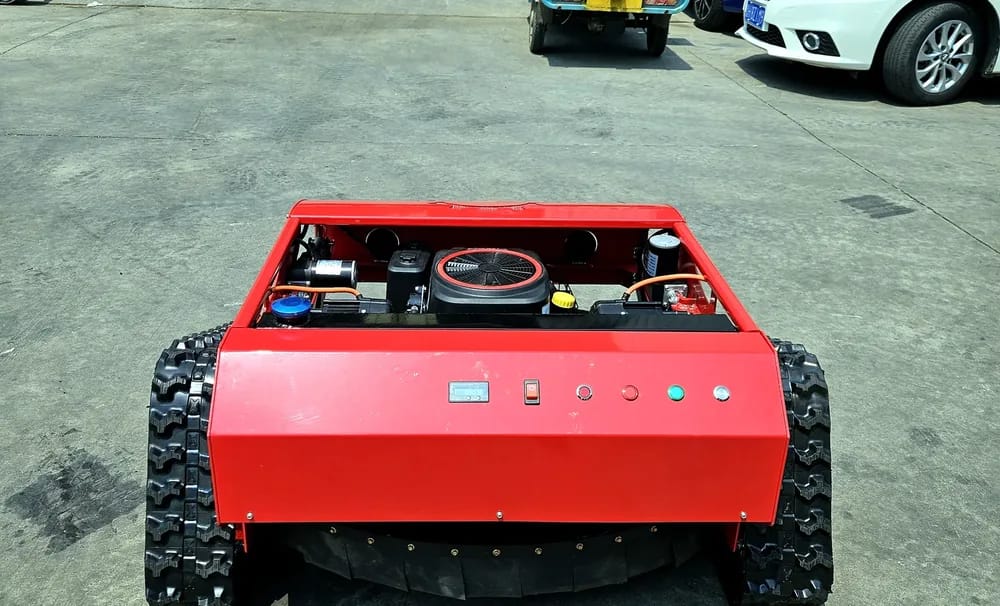
Compare the 800 mm 452-80L with wider catalog options. Include travel routes and transport space, then request the appropriate cutting setup and operating documentation.
Product photograph for model identification.
View the 452-80L configurationThese catalog figures help screen the physical route. A wider cutting width may reduce the number of passes in an open strip, but does not establish contract productivity. Obstacles, overlap, setup time and traffic controls affect the working day.
| Model | Cutting width | Machine L × W × H | Route check |
|---|---|---|---|
| 452-80L | 800 | 1070 × 1170 × 600 | Check gaps, barrier offsets and room for turns. |
| 608-90A | 900 | 1400 × 1300 × 630 | Check the full working strip and transport arrangement. |
| 810-130A | 1300 | 1430 × 1710 × 680 | Check wide access and headland space before selecting the larger body. |
Figures come from the linked model specifications. For other dimensions and engines, use the complete model comparison. Review slope, ground conditions and travel direction separately with the site checklist.
Keep safety-critical visibility requirements distinct from habitat areas outside the designated safety zone. Ask the contracting authority for the required finish and seasonal restrictions before pricing the work.
FHWA's pollinator-friendly practices include reduced mowing outside State-designated safety zones and an integrated vegetation plan. They support planning different treatments for different parts of a corridor, rather than assuming one mowing schedule everywhere.
For embankments, assess the ground as well as the angle. HSE's slope guidance identifies surface changes and obstacles as relevant factors. Use it as general risk-planning context, alongside the exact machine's instructions.
The work requires an approved site arrangement for the applicable road and task. Remote control does not replace traffic management or separation from vehicles and pedestrians. Supply the authority's requirements with your inquiry.
No. Compare usable width, obstacles, turning, overlap and setup time. Ask for an evaluation relevant to the intended task rather than estimating output from cutting width alone.
Send post spacing, barrier height, ground profile and photographs. Review the full machine envelope and cutting reach; some sections may need a separate trimming method.
Include the working strip and public-access plan with your destination.
Reviewed October 22, 2026: FHWA, roadside vegetation and pollinators; FHWA, pollinator-friendly practices; HSE, tractors and self-propelled vehicles on slopes. These references address site management, not TRAKVON performance testing.
| Model | Machine width | Machine height | Machine length | Machine weight | Catalog working slope |
|---|---|---|---|---|---|
| Four-wheel-drive 196 | 830 mm | 430 mm | 1,000 mm | 100 kg | 30° catalog figure |
| 195-80YC | 950 mm | 700 mm | 1,630 mm | 372 kg listed; machine/packed basis not stated | 45° catalog figure |
| 452-80L | 1,170 mm | 600 mm | 1,070 mm | 240 kg | 60° catalog figure |
| 608-90A | 1,300 mm | 630 mm | 1,400 mm | 330 kg | 70° catalog figure |
| 764-90A | 1,300 mm | 630 mm | 1,400 mm | 308 kg | 60° catalog figure |
| 810-130A | 1,710 mm | 680 mm | 1,430 mm | 470 kg | 60° catalog figure |
Measure the usable strip between shoulder and fence or guardrail, and record the bank angle. Confirm traffic control and public access requirements separately.
Slope figures are supplier catalog comparison values. The source sheet does not state travel direction, ground, moisture or load. Check the quoted build and model-specific operating instructions; no row in this table is a site suitability recommendation.